Patterns of Life
Life is full of patterns: From the stripes of the tiger to the spots on the leopard, the coats of animals come in many colours and shapes. Still there is a shared element between all the biological patterns, a similar aesthetic. Some patterns are clearly shaped by morphology, e.g. the wings on a bird having a different colour from the rest of the body. But there are also patterns that exist on otherwise uniform parts of the body, such as the stripes of the zebras and tigers.
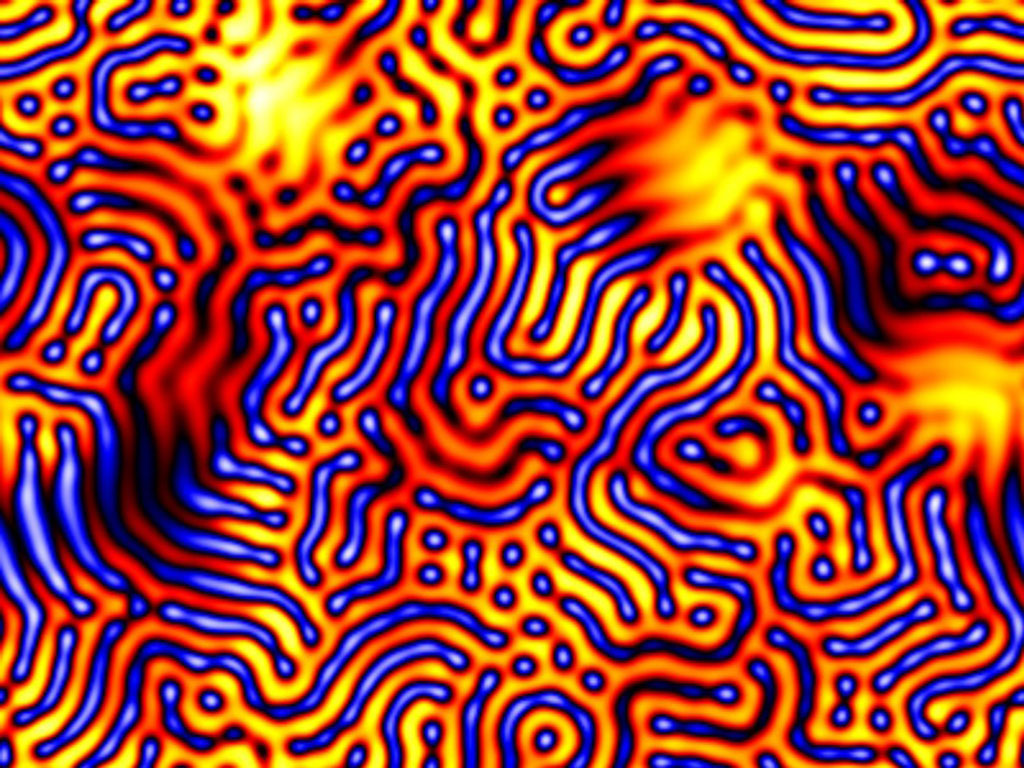
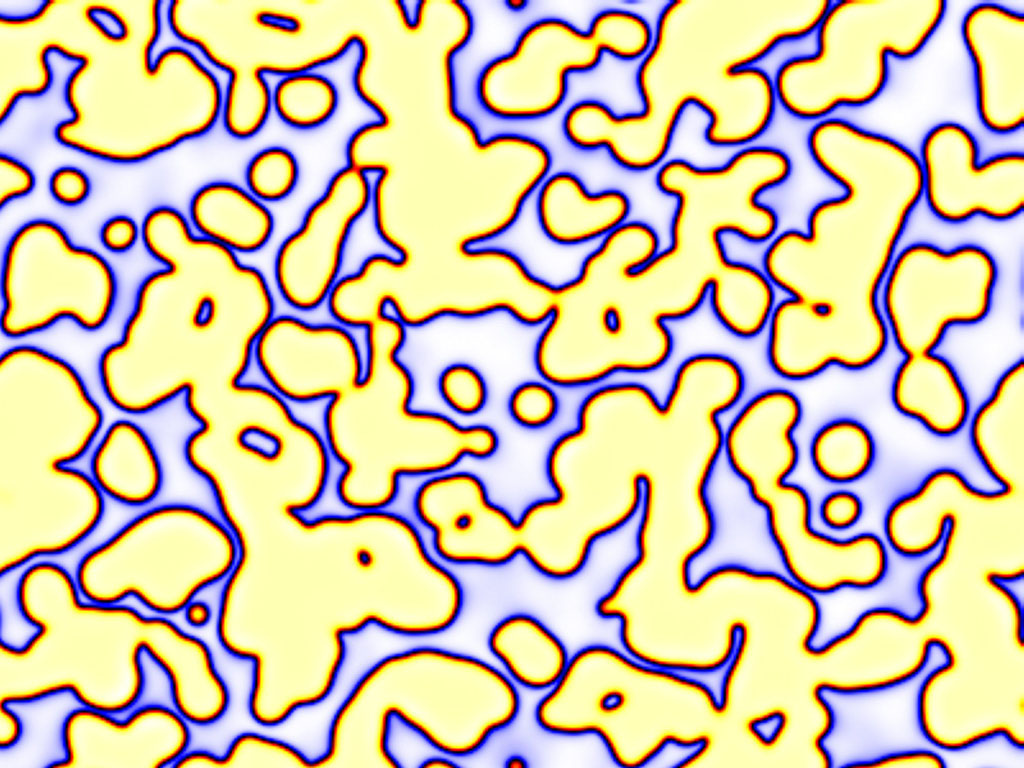
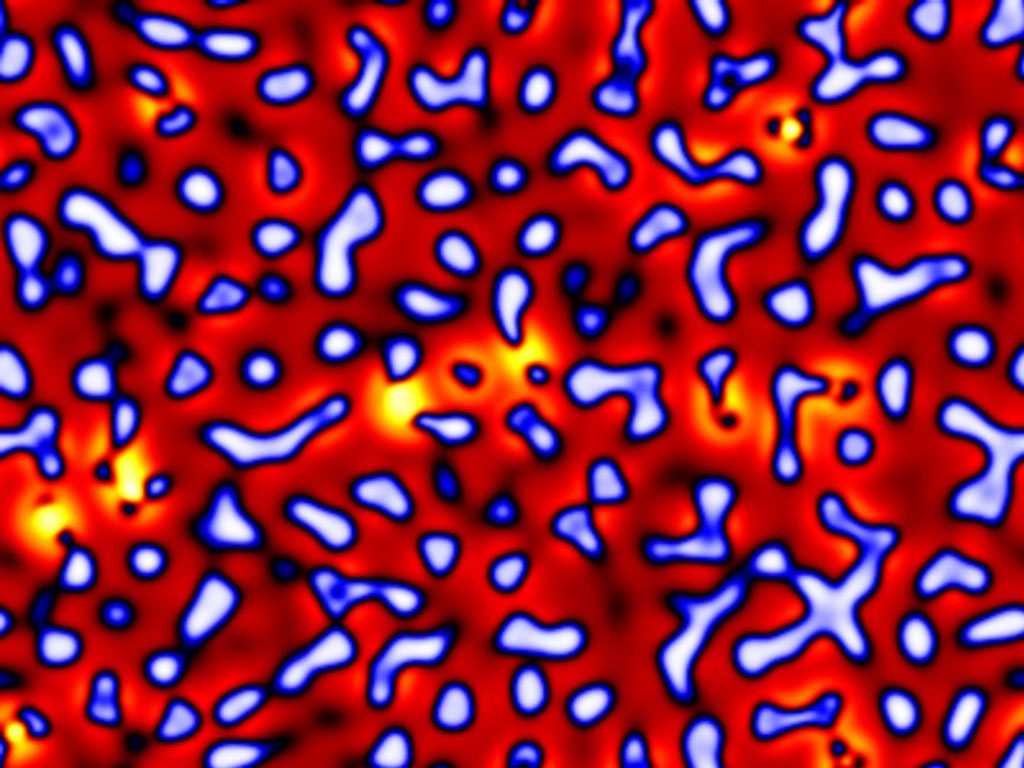
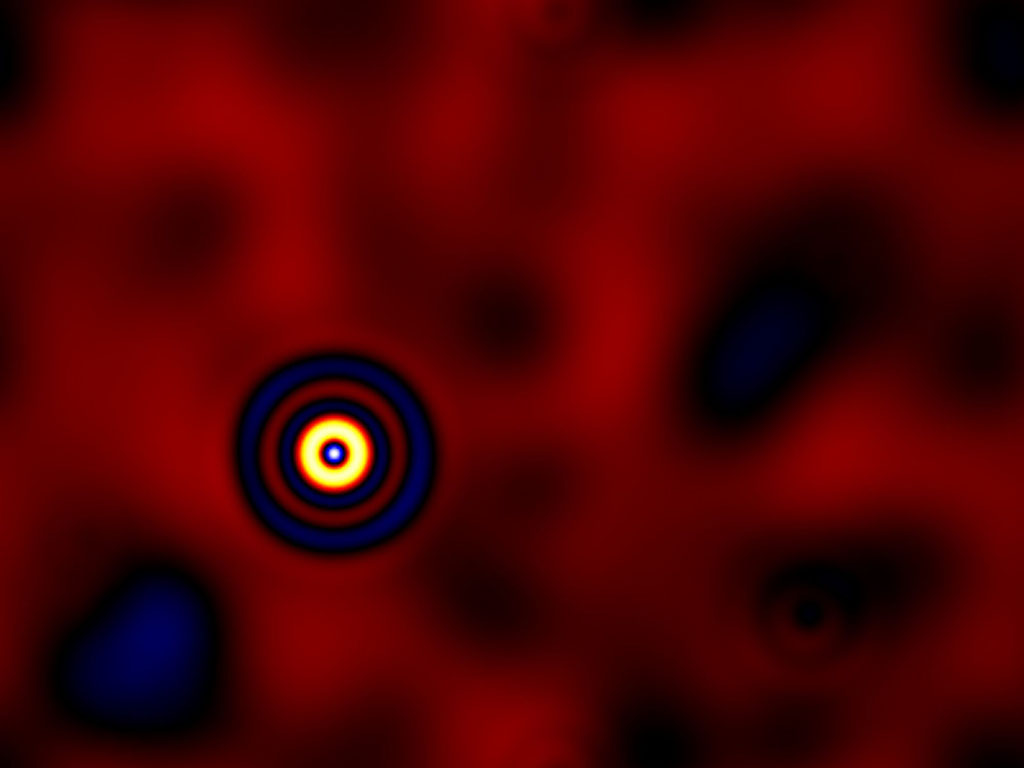
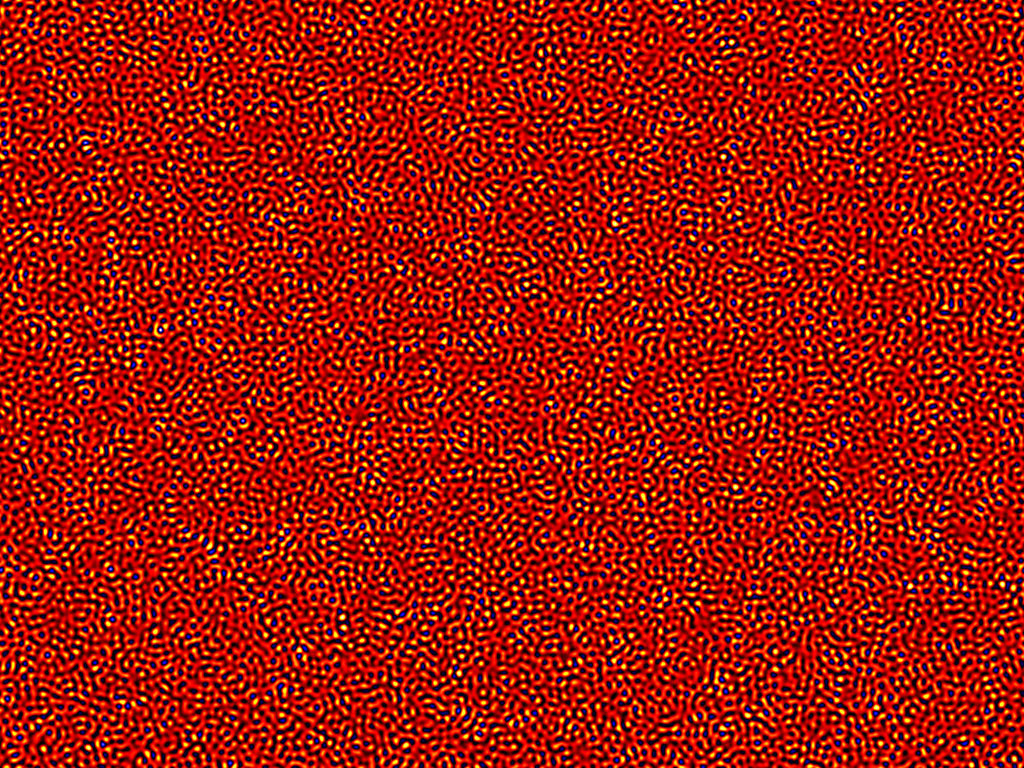
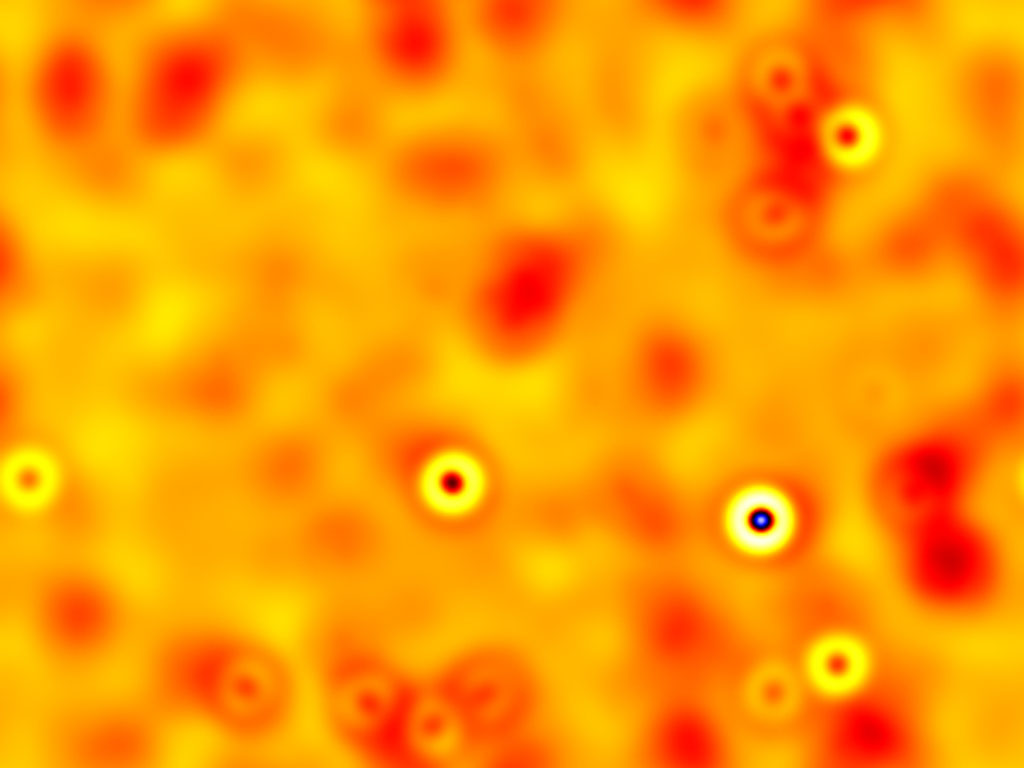
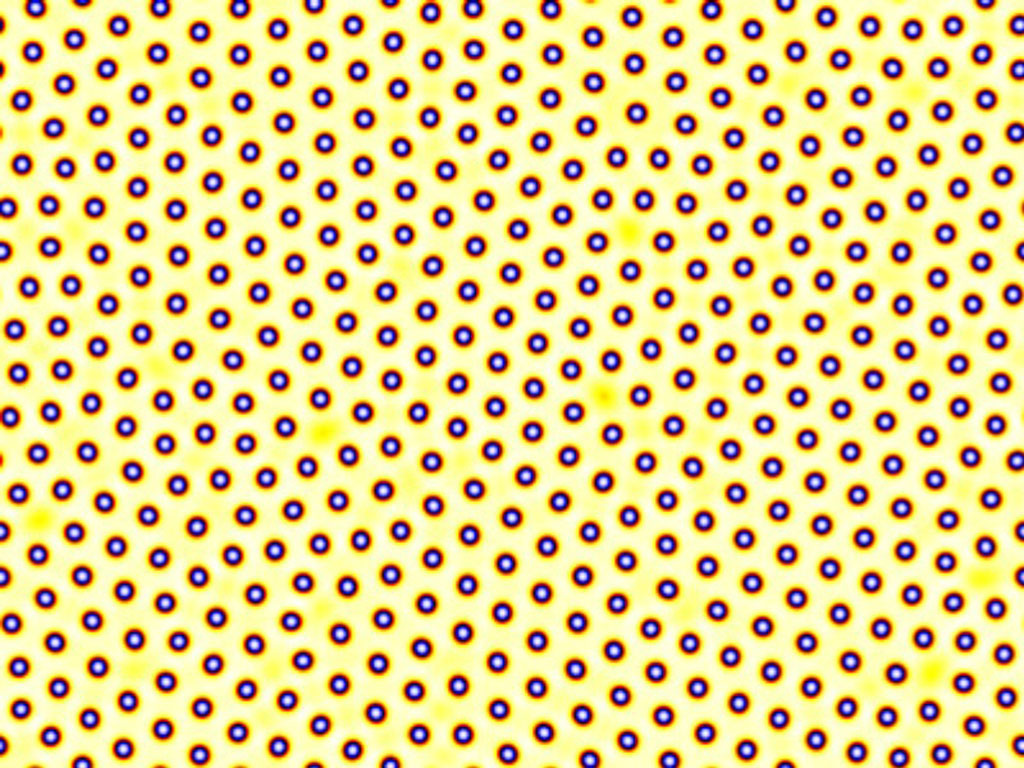
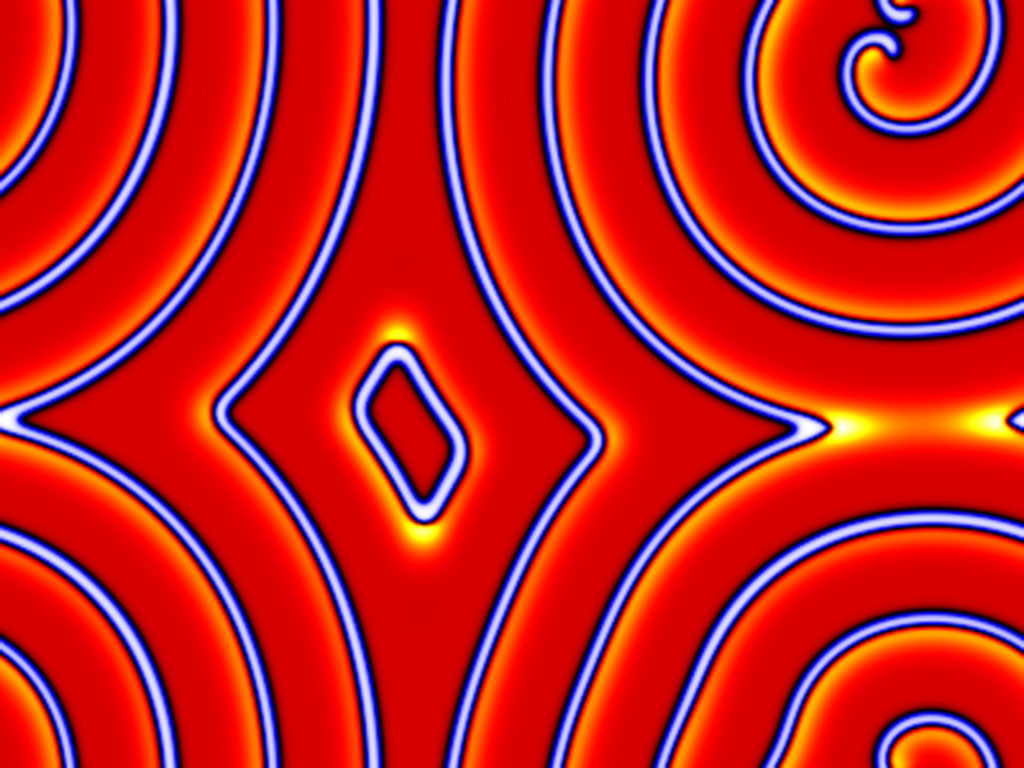
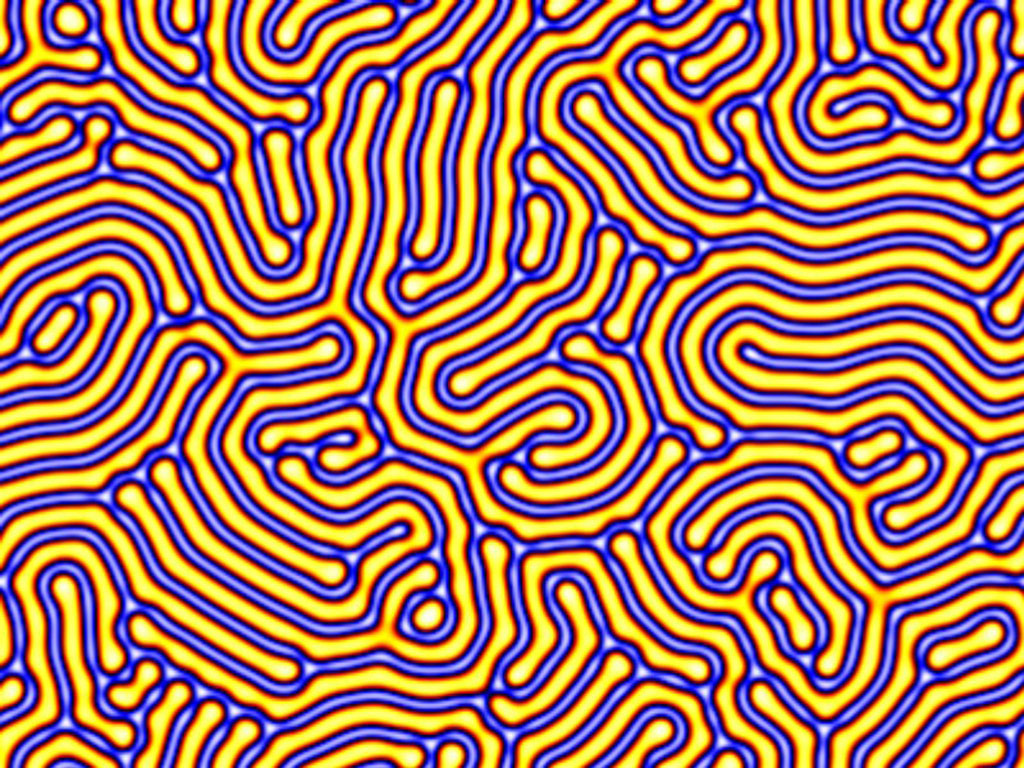
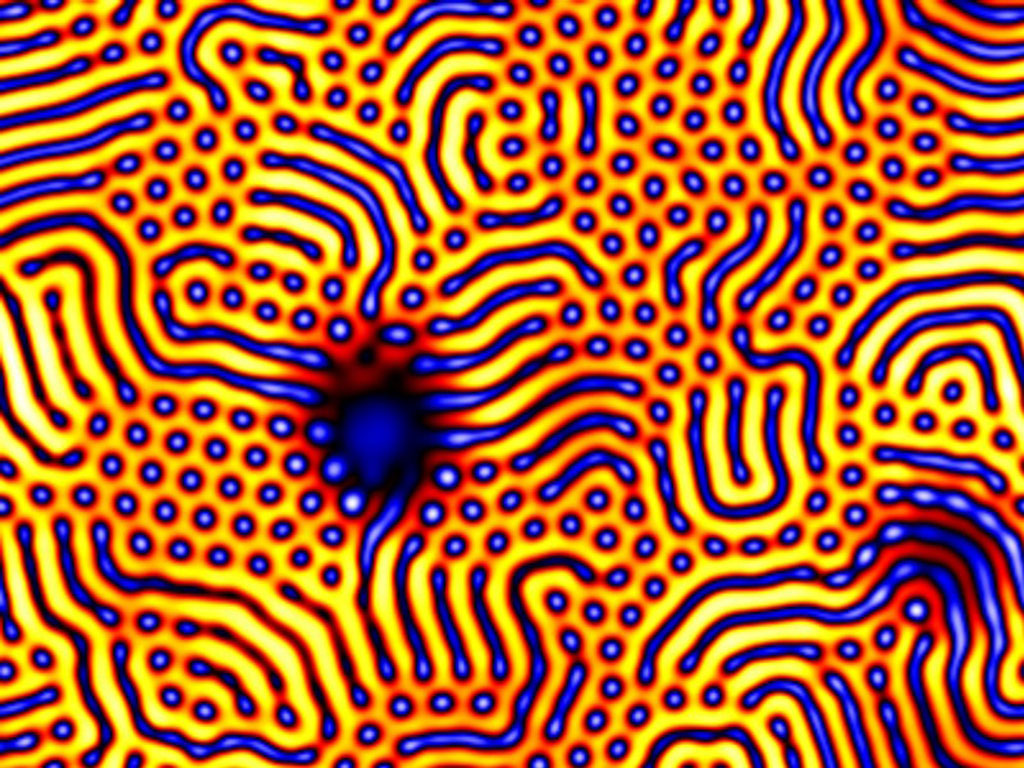
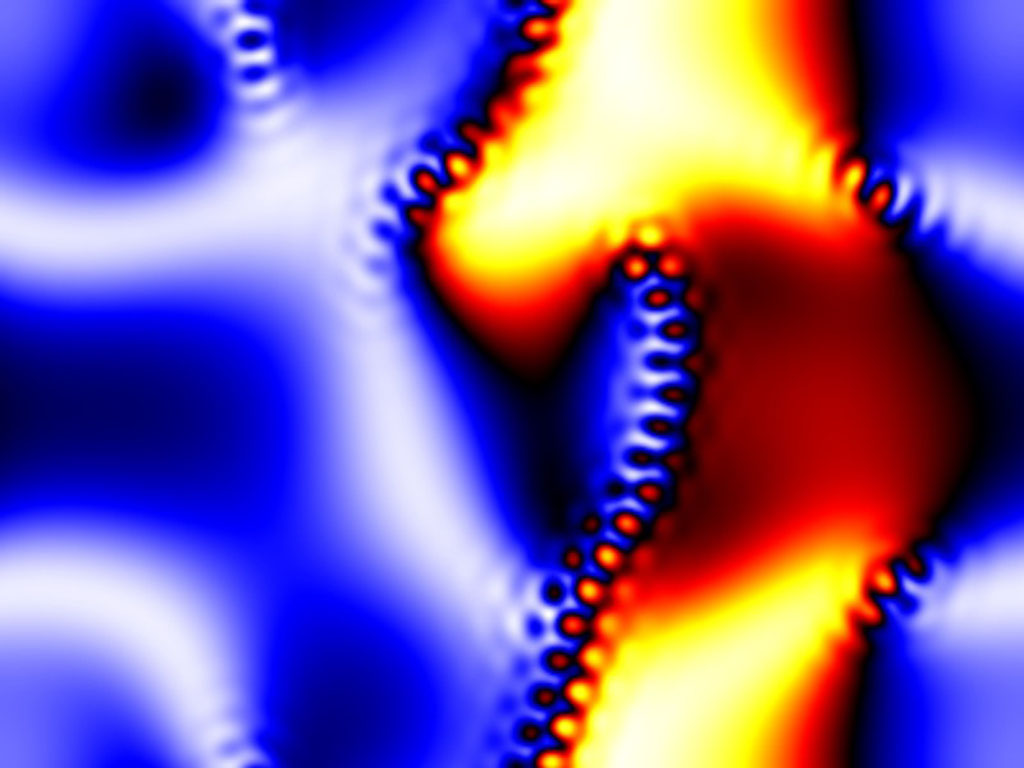
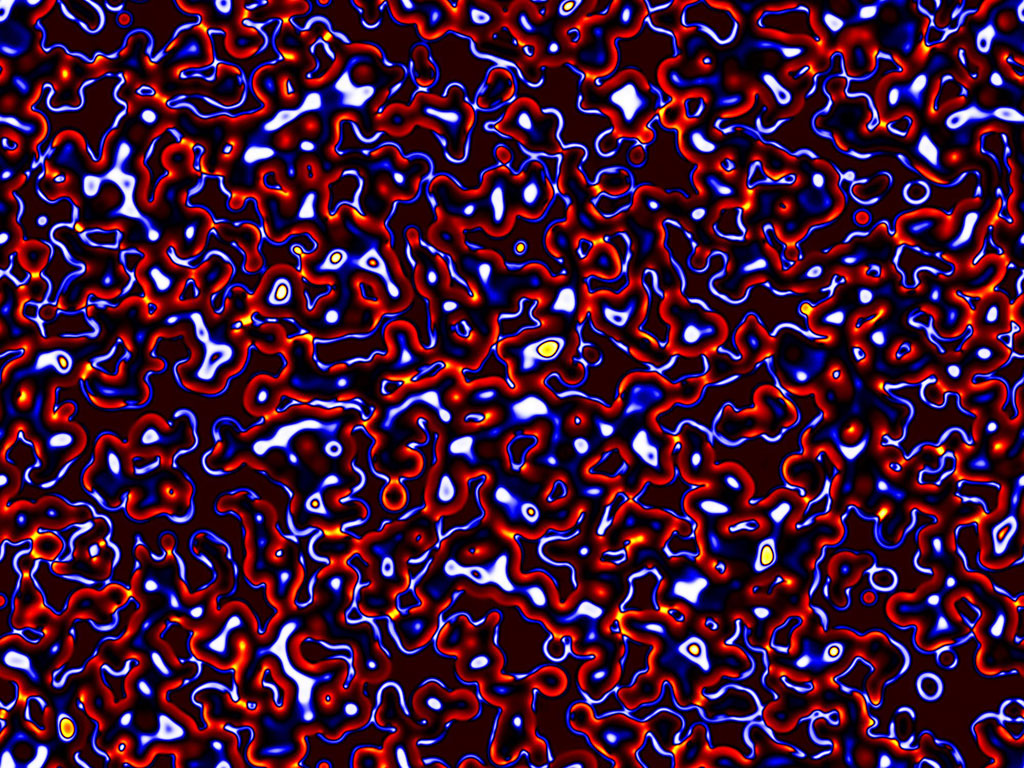
We did a mathematical study of a mathematical instability that creates organic spot and stripe patterns, and even rotating spiral waves. The result was a highly cited paper and interactive exhibit in a major science museum.
Stripes on a Tiger
In 1952 Alan Turing proposed that patterns can form as the result of diffusion. What a crazy idea! In our daily life we know diffusion as the great equalizer. Clearly the reason why the tiger has stripes is rooted in the differentiation of hair cells, some of which become black-hair-producing cells, while others become orangy-yellow-hair-producing cells. Because the different colours are organized in neat stripes the hair cells must somehow coordinate. At some point of deveolpement of the tiger the hair cells must have had a sort of discussion on who is going to produce what kind of hair.
The hair cells themselves are too big to move around much, so there dialogue must be facilitated by much smaller signalling molecules that carry information between the cells. The precise mechanisms are still unknown, but for the sake of argument we can assume that there is one type of signalling molecule that signals blackness while another signals orangeness. When the time arrives for a hair cell to make a choice it looks at the signalling molecules that arrive at its cell membrane. If the majority signals orange, we get an orange hair, otherwise we get a black one.
In our experience diffusion tends to average out concentrations. Even if we started out with more signalling molecules for, say, black at one spot, we would expect that over time diffusion would lead to an equal distribution of blackness over the whole tiger. Instead we get clearly defined stripes.
Turing realized that diffusion can not only wash out patterns, it can also produce them. This is possible when two different substances diffuse that react with each other either directly or indirectly, e.g. via the hair cell. In that case we can start with a blank slate where the signalling molecules are equally distributed and then watch them redistribute to form patterns.
A Puzzle in Marine Sediments
Many years after Turings foundational work Martin Baurmann, Ulrike Feudel and I became interested in pattern formation in marine sediments. Even tidal flats that look like uniform expanses of mud to the naked eye have chemical patterns. Imagine standing on a nearly flat plane of mud that is dozens of miles wide, but if you measure the chemicals in the sediments beneath your feet, the results you get in one spot are very different from the results you get only a hand’s breadth away. How is this possible? What causes these differences? Was it possible that the bacteria in marine sediments coordinated in a similar way as the hair cells in the tiger?
We made a simple mathematical model, which is still perhaps the simplest ecological model that exhibits spontaneous pattern formation. It showed that chemical pattern formation in marine sediments was plausible. More importantly the model was so simple that we could study the pattern-formation mathematically, but there was a surprise waiting for us.
When we change parameters of a system gradually, the behaviour of a system typically responds gradually as well. But there are specific parameter thresholds at which the behaviour changes radically. These thresholds are called bifurcations and form the boundary between qualitatively different types of behaviour. The onset of pattern formation is such a bifurcation, which is called Turing bifurcation, in honour of Alan Turing. But when we analyzed our mathematical we found not only the Turing bifurcation, but also a Hopf bifurcation which marks the onset of sustained oscillations in the system.
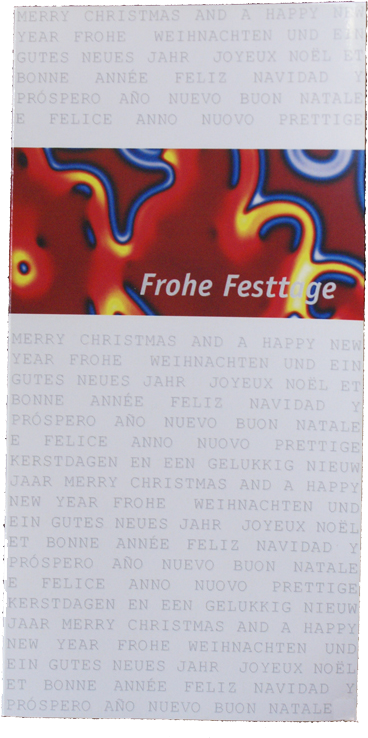
This Christmas card of the Max-Planck Society uses a pattern from the project
More Patterns and a Museum
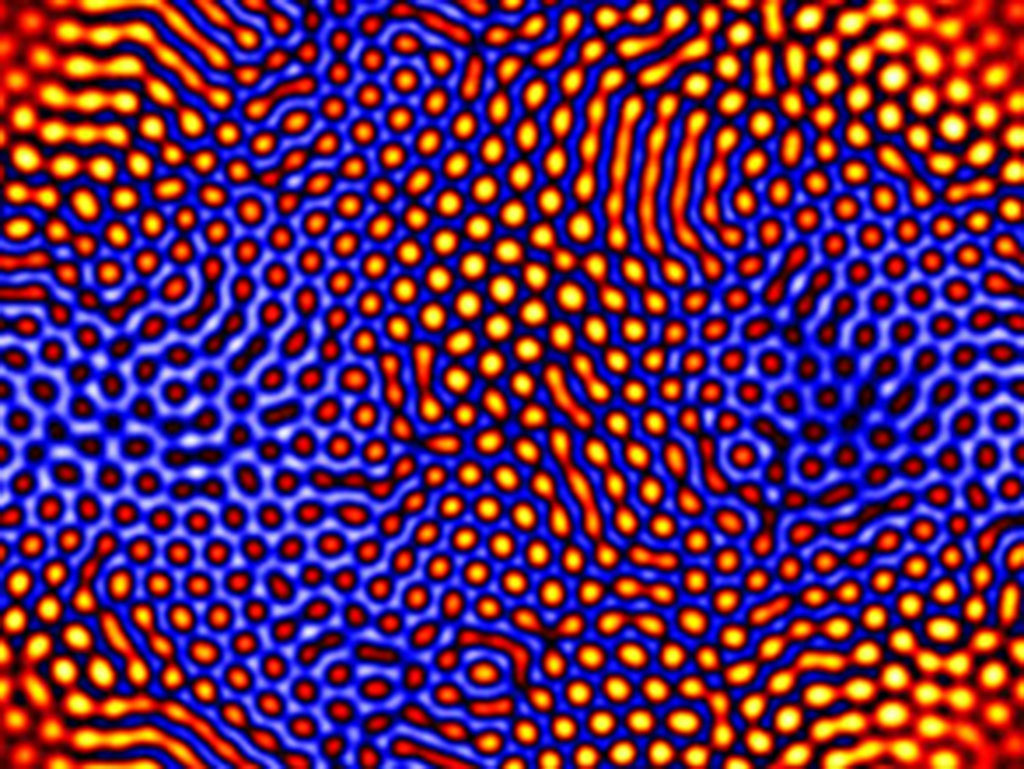
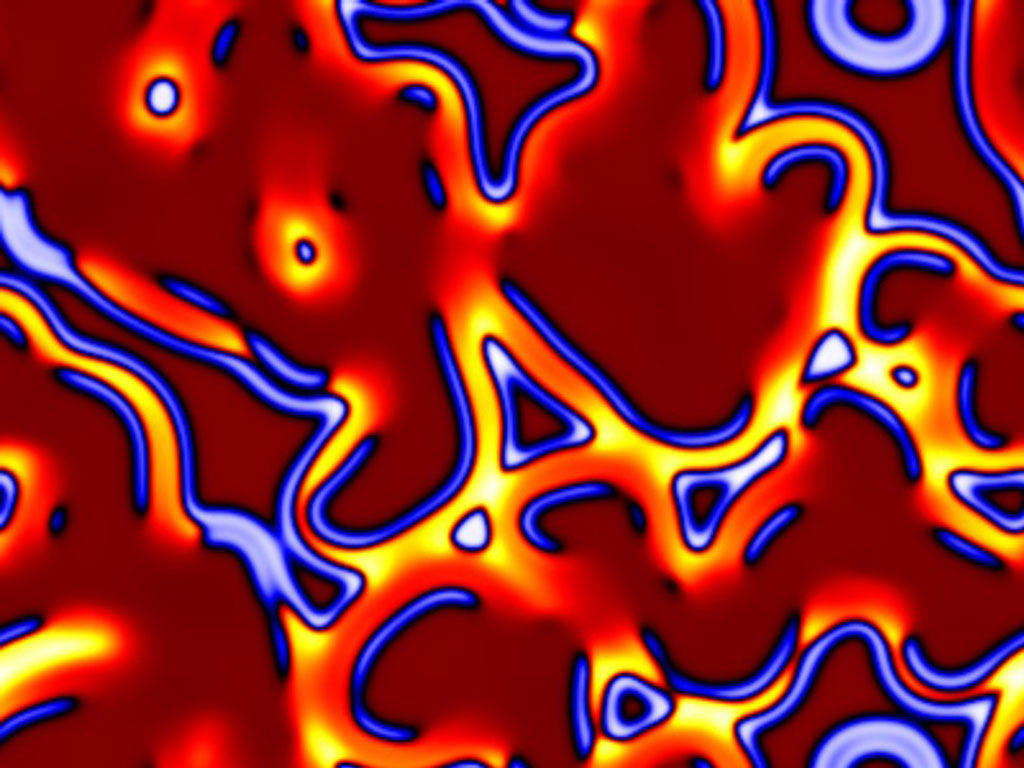
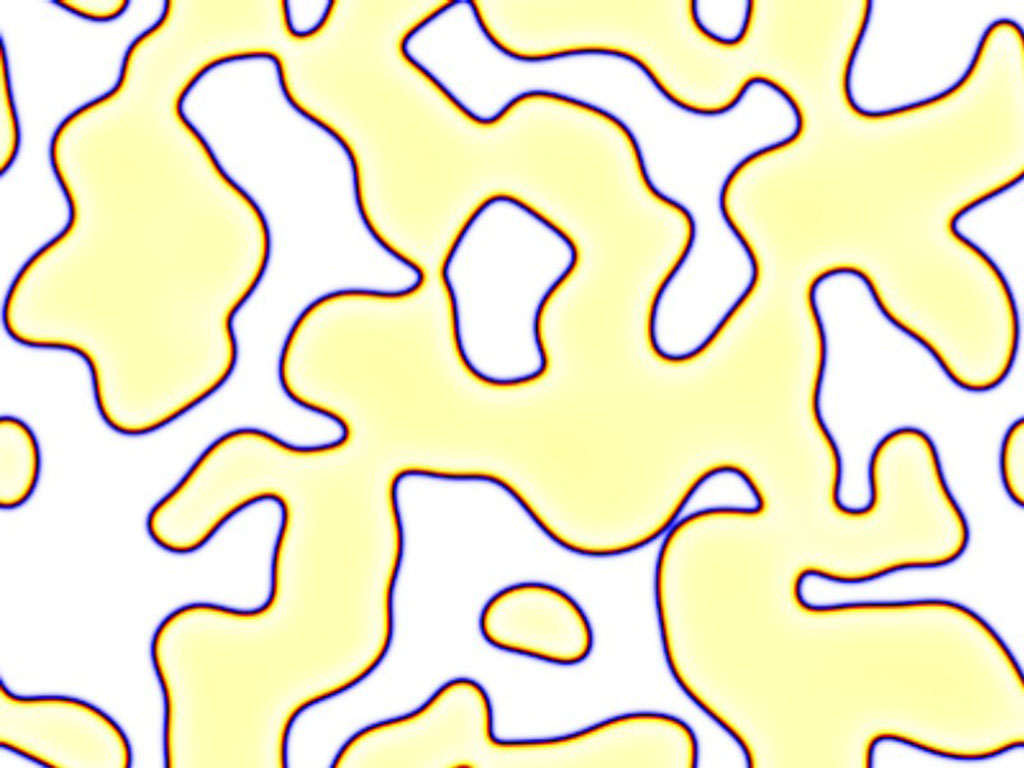
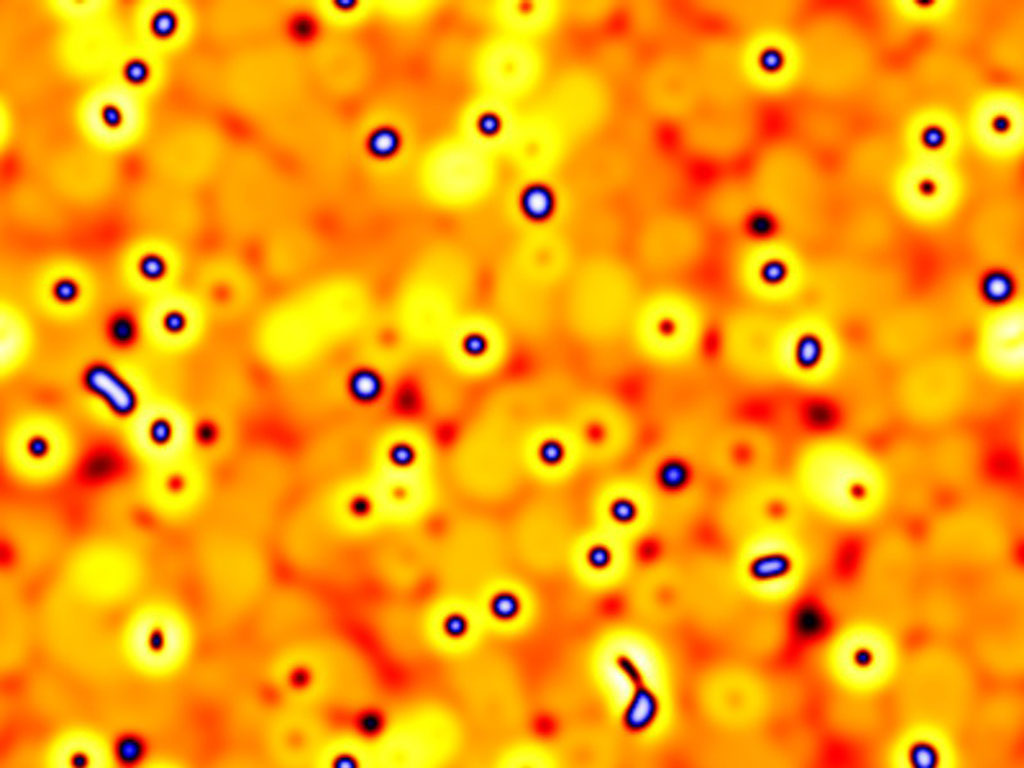
The Turing and Hopf Bifurcations are two different fundamental instabilities of spatial systems. In our model these instabilities intersect and interact, and if parameters are chosen close to the intersection then pattern formation goes wild. Some first simulation runs revealed a few stationary patterns but many more showed complex spatiotemporal structures that combined oscillations with spatial shapes. Clearly we needed to do many more simulations to explore what else was possible in this system.
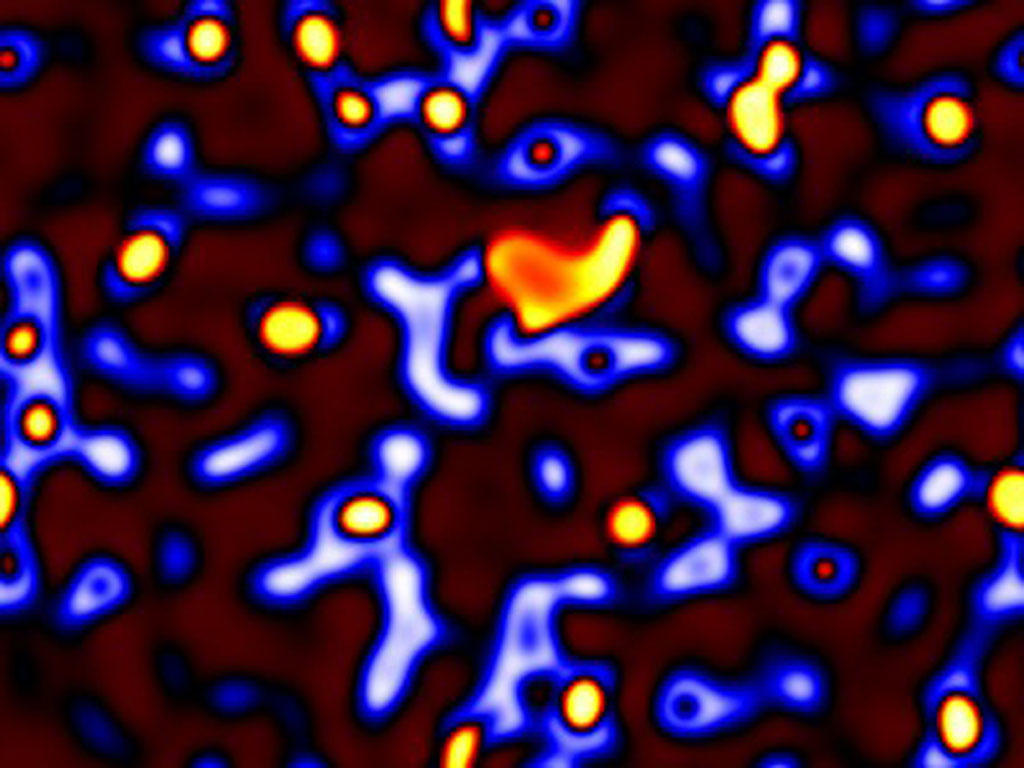
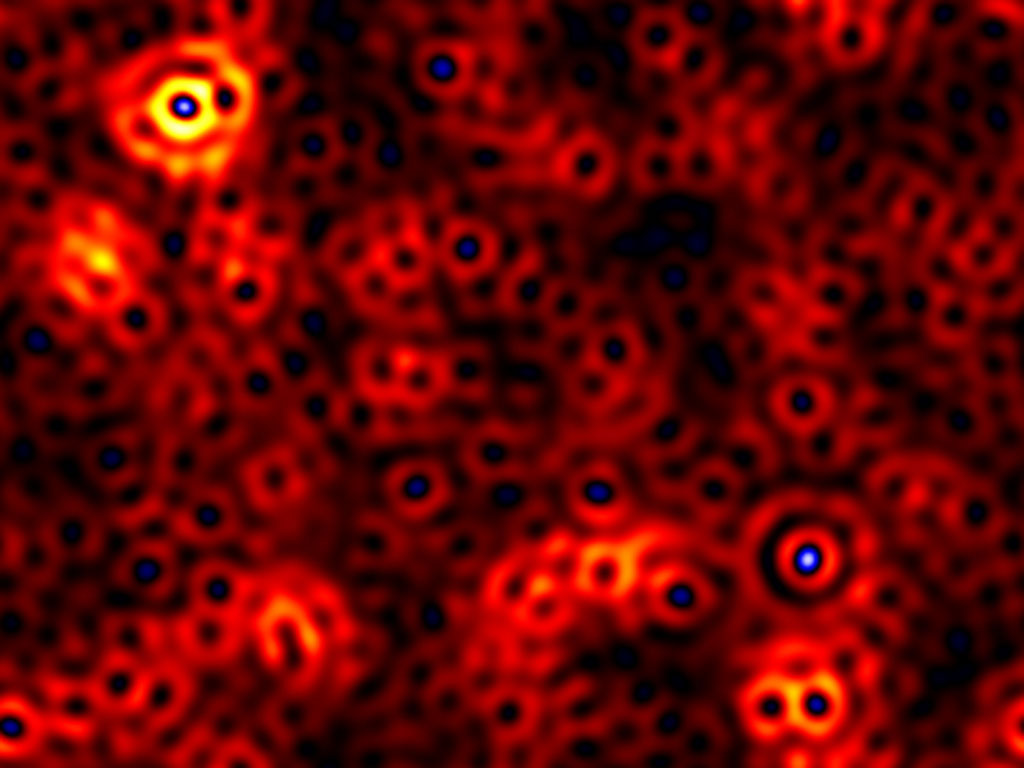
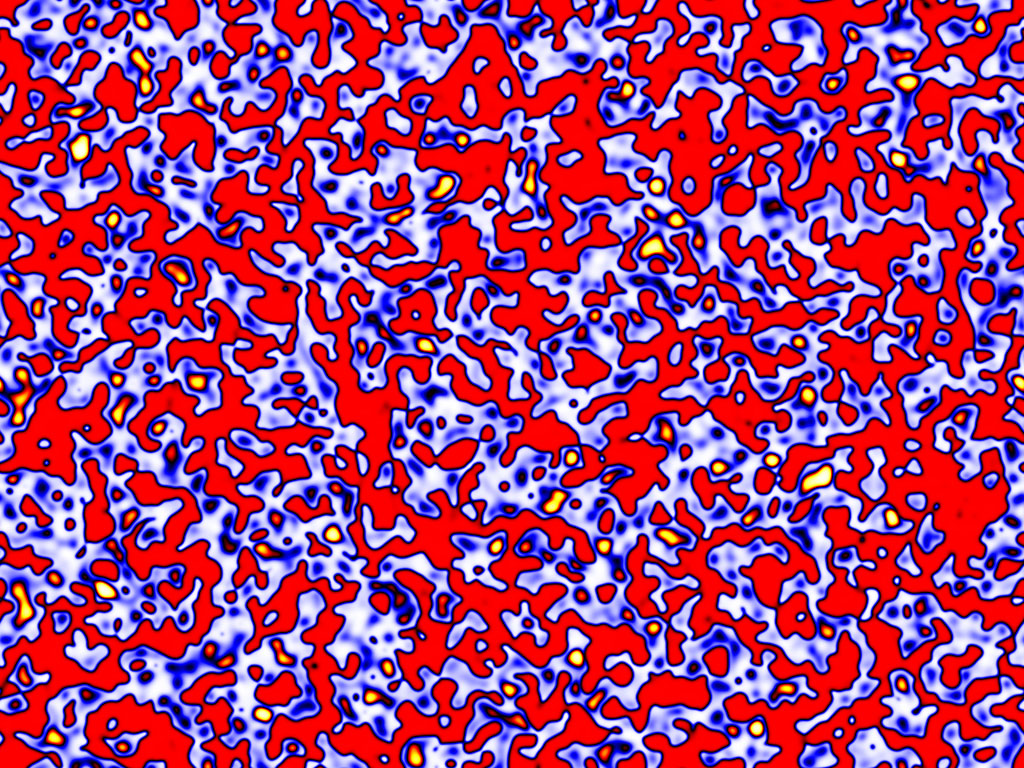
Now there was an idea: We needed to run a lot of simulations of fantastic shifting patterns that created themselves out of nowhere, sometimes collapsed back to nothing, sometimes settled into predictable patterns and sometimes descended into chaos—it was fascinating to watch.
At the same time a new science museum had just opened in Bremen, the Universum Science Center. In a conversation it came up that science museums only ever show the results of science, but not how the science really happens, and we had the perfect solution: Our simulations were science being done, and they were interesting to watch.
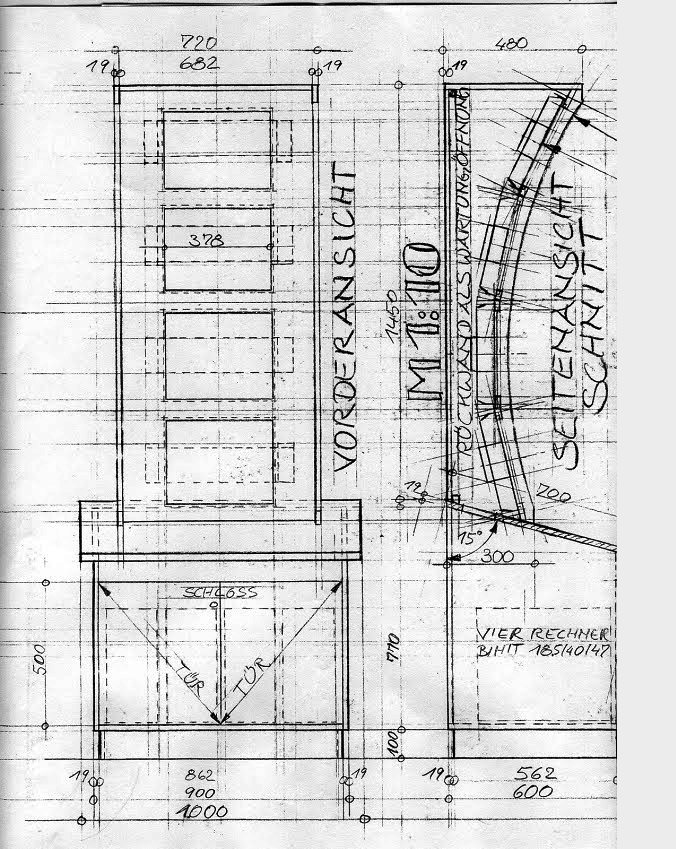
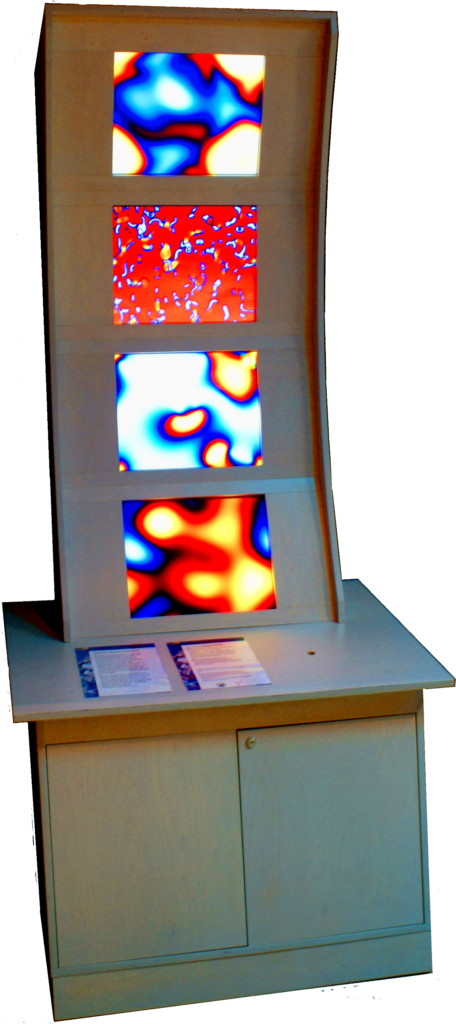
We approached the museum and obtained some funding from the local EWE foundation. The money paid for a fancy exhibit that we called “patterns of life,” which contained four computers and four screens that were constantly running simulations. Some interactivity allowed visitors to identify interesting parameter values for more simulation runs and thus become participants in the research.
The “patterns of life” exhibit ran for four years in the permanent exhibition of the Universum Science Center, afterwards the installation had a second life in the lobby of the Institute for Chemistry and Biology of the Marine environment (ICBM).